

Traditional Maltese Food
and dive deeper
A Guide to Malta’s Most Loved Dishes, Snacks, Drinks and Sweets.
Traditional Maltese food blends Mediterranean influences with local ingredients, creating a cuisine built around comfort, seasonality, and sharing. From satisfying street snacks and hearty dishes to seafood, desserts, and iconic local drinks, this guide explores the flavours that define food in Malta and the island’s rich Maltese cuisine.
What makes traditional Maltese food different from other Mediterranean cuisines?
Traditional Maltese food stands out for its mix of Mediterranean, Sicilian, British, and North African influences. It combines rustic cooking, seasonal ingredients, and strong local traditions to create flavours that feel both familiar and distinctive.
Unlike lighter Mediterranean cuisines that focus heavily on olive oil and seafood alone, Maltese cuisine is often heartier and more home-style in character. Pasta bakes, slow-cooked meats, filled pastries, and rustic soups all play an important role alongside fresh fish and vegetables.
Malta’s position in the centre of the Mediterranean shaped both its culture and its food. Over centuries, different civilisations left their mark on the island, influencing everything from spices and sauces to baking traditions and sweet treats. This layered history is what gives traditional Maltese food a rather unique identity.
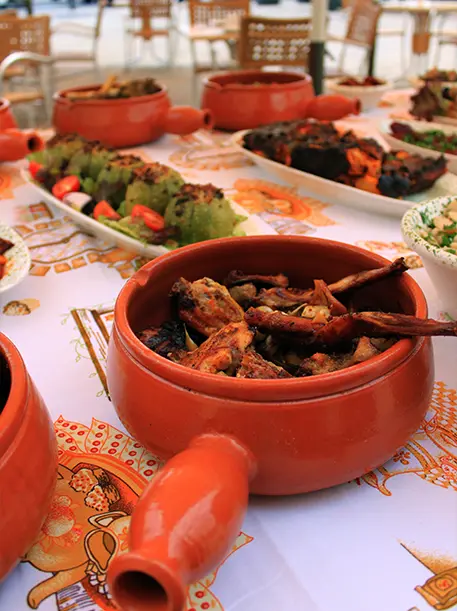 Rabbit stew.
 Hobz biz-zejt,
Popular Maltese snacks and street food
Street food is one of the most recognisable parts of traditional Maltese food, with snacks which you can easily pick up all over the island, from small convenience shops and bakeries to pastizzeria kiosks. These quick bites are affordable, flavourful, and connected to everyday life in Malta.
- Pastizzi: Malta’s most iconic street food, these flaky pastries are typically filled with ricotta or mushy peas. They are best enjoyed fresh and hot from local pastizzerias, particularly in towns like Rabat.
- Qassatat: Similar to pastizzi but larger and more open, qassatat are filled with ricotta, peas, spinach, or anchovies. Their pastry is slightly firmer and more doughy.
- Ħobż biż-żejt: A crusty Maltese bread or ftira spread with tomato paste and filled with tuna, capers, olives, and sometimes ġbejniet. It’s a classic lunch and a staple of Malta’s traditional food.
- Maltese platters: Traditional sharing platters often include galletti crackers, ġbejniet cheeselets, bigilla (a broad bean dip), sundried tomatoes, olives, bebbux (snails) and local sausage. They pair perfectly with wine or local beer.
- Twistees: A beloved Maltese cheesy rice-based crisp snack with a strong flavour and huge following. They’re commonly enjoyed at beaches, parties, and casual gatherings.
Winter comfort dishes in traditional Maltese food
Winter dishes in Malta are hearty, warming, and built around slow cooking and seasonal vegetables. These meals reflect Malta’s home-style cooking traditions at their most comforting.
- Timpana: A baked pasta pie made with macaroni and meat sauce enclosed in pastry. It’s rich, filling, and often homemade for family gatherings.
- Bragioli (Beef olives): Thin beef rolls stuffed with breadcrumbs, bacon, herbs, and egg, then slowly braised in wine and tomato sauce. Despite the name, there are no olives involved.
- Minestra: A thick vegetable soup packed with seasonal produce and often served with crusty bread. Many Maltese families have their own version passed down through generations.
- Soppa tal-Armla (Widow’s Soup): A traditional vegetable soup usually topped with fresh ġbejniet and sometimes a poached egg. It’s simple, rustic, and a favourite of Maltese dishes.
Pastizzi; traditional Maltese food.Which traditional Maltese desserts should visitors try?
Desserts and sweets are an important part of traditional Maltese food, often linked to festas, celebrations, and family traditions. Many combine Mediterranean flavours with strong Sicilian and Arab influences.
- Imqaret: Deep-fried pastries filled with spiced date paste, often served warm and sometimes paired with vanilla ice cream. They are especially popular at village events and food stalls.
- Qubbajt: A traditional nougat made with almonds, honey, and sugar. It is commonly sold during festas and open-air celebrations.
- Kannoli: Inspired by Sicilian cannoli, these crisp pastry tubes are filled with sweet ricotta cream and sometimes topped with pistachios or chocolate.
- Ħelwa tat-Tork: A sesame-based confection similar to halva, usually flavoured with nuts. It is commonly sliced and served as part of dessert platters or alongside coffee.
Traditional Maltese drinks to try
Local drinks are just as much a part of Maltese cuisine as the dishes themselves. From bittersweet soft drinks to local liqueurs, Malta has several distinctive beverages worth trying.
- Kinnie: Malta’s signature soft drink with a bittersweet citrus and herbal flavour. Visitors usually either love it or hate it, but it’s considered essential to try.
- Cisk: The island’s most famous local lager and a staple during warm summer days. Variations like Cisk Chill and Cisk Excel are also widely available.
- Bajtra liqueur: A sweet liqueur made from prickly pear fruit, often served chilled after dinner. It has become one of the most recognisable Maltese spirits.
- Maltese coffee: Traditional Maltese coffee is often brewed with cloves, aniseed, or citrus peel, giving it a richer and more aromatic character than standard coffee.
Frequently Asked Questions about Traditional Maltese Food
Traditional Maltese food combines a blend of Mediterranean flavours shaped by Sicilian, British, and North African influences. Rustic home cooking, seasonal ingredients, seafood, pastries, and slow-cooked dishes reflect Malta’s history and culture.
Valletta offers plenty of places to enjoy traditional Maltese food, especially around the city’s side streets and Merchants Street. Visitors will find restaurants serving classic Maltese dishes, local wines, sharing platters, seafood, and traditional pasta dishes in both casual and refined settings.
Maltese cuisine is hearty, flavourful, and strongly connected to local traditions and seasonal produce. Expect a mix of seafood, baked dishes, pastries, slow-cooked meats, and Mediterranean-style sharing food.
Some of the must-try dishes traditional Maltese food include pastizzi, fenkata (rabbit stew), lampuki pie, timpana, and ħobż biż-żejt. Together, they offer a strong introduction to the island’s most recognisable flavours.
Maltese cuisine has been shaped by centuries of Mediterranean influence, particularly from Sicily, Italy, and North Africa. This can be seen in the island’s use of pasta, seafood, spices, pastries, and slow-cooked dishes.
For many Maltese families, cooking remains an important social and cultural tradition centred around sharing meals together. Local ingredients are highly valued, and many families still use vegetables, olive oil, herbs, and produce sourced through local farmers.
Common ingredients in traditional Maltese food include tomatoes, olive oil, capers, garlic, fresh herbs, bayleaf, and other spices. These ingredients form the foundation of many classic Maltese dishes.
Visitors looking for authentic food in Malta should head to Mġarr for traditional rabbit and meat dishes, Marsaxlokk for fresh seafood and seasonal lampuki, and Valletta for a wide variety of modern and traditional Maltese dining experiences. Each location offers a different perspective on the island’s culinary identity.
4-star All-Inclusive Resort, AX Odycy in Qawra Malta. Photo Credits go to Viewing Malta.