

Wander Through Centuries of Valletta History
and dive deeper
From the Great Siege of Malta and the Knights of St John to wartime tunnels and Baroque cathedrals, Valletta’s history reveals the story of Malta itself.
Explore the city’s most important landmarks, churches, museums, and streets while uncovering the people, culture, and events that shaped Valletta into one of Europe’s most fascinating capitals.
What is the history of Valletta and how did the city begin?
The story of Valletta’s history begins after the Great Siege of Malta in 1565, when the Knights of St John decided to build a new fortified capital city. Valletta was designed as both a military stronghold and a permanent home for the Order on the peninsula overlooking the Grand Harbour.
Before Valletta existed, Mdina served as Malta’s old capital, but the Knights felt it was too far inland to properly defend the island. Instead, the Knights chose the strategic Sciberras Peninsula, allowing them to control both the Grand Harbour and Marsamxett Harbour.
The city was designed by military architect Francesco Laparelli, assisted by Maltese architect Girolamo Cassar. Unlike Mdina’s winding medieval streets, Valletta followed a modern grid system with wide straight roads designed for defence, ventilation, and organisation. Auberges were built for the different “Langues” or national divisions of the Knights, while churches, palaces, and bastions reflected both military strength and religious importance.
Today, much Valletta’s history remains visible in almost every corner of the city, from its fortified walls and Baroque facades to its piazzas, churches, and historic streets.
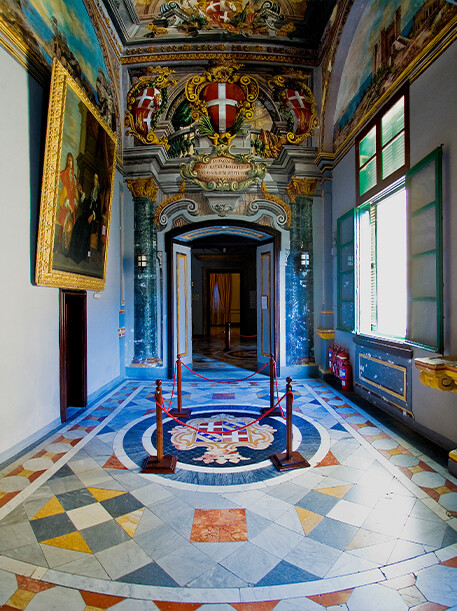 Grandmaster’s Palace, Valletta.
 St. John’s Co-Cathedral Valletta.
Knights of St John landmarks in Valletta
Many of the most important chapters of Valletta history are tied directly to the Knights of St John, whose influence shaped the city’s architecture, religion, and political identity. Their legacy can still be explored through Valletta’s palaces, auberges, and churches.
- Grand Master’s Palace: One of the first major buildings constructed in Valletta, the Grand Master’s Palace served as the political centre of the Knights’ rule. Visitors can explore richly decorated halls, period furnishings, tapestries, and the famous Palace Armoury filled with historic weapons and suits of armour.
- St John’s Co-Cathedral: One of the defining landmarks of Valletta’s historical heritage, the cathedral’s plain exterior hides an extraordinary Baroque interior filled with gold leaf, marble tombs, and ornate chapels. It is also home to Caravaggio’s The Beheading of St John the Baptist, one of Malta’s greatest artistic treasures.
- Auberge de Castille: Originally built to house the Knights from Castille, León, and Portugal, Auberge de Castille is now the Office of the Prime Minister. Its elevated position and grand façade make it one of the most recognisable buildings linked to the history of the construction of Valletta.
WWII and military history sites in Valletta
Beyond the Knights, Valletta also played a central role in Malta’s wartime story, particularly during World War II. The city’s forts, tunnels, and underground chambers became crucial military locations during some of the Mediterranean’s most difficult years.
- Fort St Elmo & National War Museum: Located at the tip of Valletta, Fort St Elmo played a major role during both the Great Siege and WWII. Today, the National War Museum inside the fort showcases military artefacts including the George Cross awarded to Malta in 1942.
- Lascaris War Rooms: Hidden beneath the Upper Barrakka Gardens, these underground chambers acted as the British Allied War Headquarters during WWII. From here, Operation Husky was coordinated.
- Valletta Underground: Beneath the capital’s streets lies a maze of tunnels, cisterns, and wartime shelters revealing another side of Malta’s history. Guided tours offer insight into how these underground spaces protected civilians and stored supplies during times of conflict.
Siege Bell War Memorial.Historic churches beyond St John’s Co-Cathedral
Religion has always been central to Valletta culture, and the city is home to several important churches beyond its famous cathedral. These churches reveal different aspects of Malta’s religious and artistic heritage.
- Church of St Augustine: Originally designed by Girolamo Cassar in the 1570s, the Church of St Augustine combines Baroque architecture with important religious artworks. It also houses an admired 18th-century Mascioni organ.
- Basilica of St Dominic: Also known as Porto Salvo Basilica, this church was historically associated with sailors and maritime devotion. Its artworks by Giuseppe Calì and long connection to Valletta’s seafaring community make it an important religious landmark.
- Collegiate Parish Church of St Paul’s Shipwreck: One of Valletta’s oldest churches, this Baroque landmark commemorates the shipwreck of St Paul on Malta. Every February, its famous feast and procession remain an important part of local Valletta cultural events.
Strait Street and everyday Valletta life
Not all of Valletta’s history is found in grand palaces and churches. Streets like Strait Street reveal a more everyday, social side of the capital and help explain how Valletta functioned as a living city for centuries.
Historically known as “The Gut,” Strait Street became famous during the British period for its bars, music venues, cabaret culture, and nightlife. Sailors, soldiers, musicians, performers, and locals all crossed paths here, giving the street a reputation very different from Valletta’s more formal political and religious spaces. Today, much of Strait Street Valletta’s history still survives through restored bars, live music venues, and atmospheric side streets.
Elsewhere in the city, markets, band clubs (known as “kazini”), and local shops continue to reflect the rhythms of daily Valletta life. The open-air market and smaller community spaces remain an important part of modern Valletta culture, blending local traditions with the city’s growing creative and cultural scene.
Lascaris War Rooms, Valletta.Upper Barrakka Gardens, Valletta Malta.Museums and cultural sites that define Valletta history
Valletta’s museums and public spaces help connect visitors to thousands of years of Maltese history and identity. Together, they make the capital one of the richest cultural destinations in the Mediterranean.
- National Museum of Archaeology: Located inside the Auberge de Provence, this museum traces Malta’s story from prehistoric temple builders to the Phoenician era. Highlights include the famous Sleeping Lady and Venus of Malta figurines.
- MUŻA National Museum of Art: Housed within a restored auberge, MUŻA combines classical and contemporary works while exploring Malta’s artistic identity. It is one of the key valletta cultural sites for understanding the island’s creative history.
- Upper Barrakka Gardens: Offering panoramic views across the Grand Harbour, the gardens were once reserved for the Knights. Today, they remain one of the most visited locations connected to the ebb and flow of life in the Grand Harbour.
How does Valletta Malta history connect to the wider history of Malta?
Valletta’s history reflects the wider story of Malta through politics, religion, warfare, culture, and daily life. The capital remains the island’s administrative, cultural, and symbolic centre even today.
Modern Valletta still houses Parliament, the Law Courts, museums, theatres, churches, and some of Malta’s most important national institutions. Its museums preserve everything from prehistoric artefacts to wartime history, while the Grand Harbour continues to connect Valletta to Malta’s maritime identity.
The city also captures different layers of Maltese culture in one compact place. Visitors can explore Baroque churches, wartime tunnels, open-air cafés, local markets, art museums, and historic streets all within walking distance. This combination of living culture and preserved heritage is what makes Valletta history such an essential part of understanding Malta itself.
Frequently Asked Questions about the History of Valletta
Valletta is considered one of Malta’s most historically important cities because it was built by the Knights of St John following the Great Siege of 1565 as a fortified capital. Today, its churches, palaces, bastions, and museums continue to preserve key chapters of Maltese history and identity.
The construction of Valletta began after the Knights of St John successfully defended Malta during the Great Siege of 1565. Grand Master Jean Parisot de Valette then commissioned a new fortified city overlooking the Grand Harbour to better defend the island from future attacks.
Some of the most important Valletta historical sites include St John’s Co-Cathedral, the Grand Master’s Palace, Fort St Elmo, the Lascaris War Rooms, and the Upper Barrakka Gardens. Together, these landmarks reveal the city’s religious, military, and political history.
The Knights of St John shaped nearly every aspect of Malta’s history, from the city’s fortified layout to its churches, auberges, and public buildings. Their influence can still be seen in Valletta’s Baroque architecture, military structures, and cultural heritage.
The history of St John’s Co-Cathedral dates back to the late 16th century, when it was built by the Knights as their conventual church. Its richly decorated Baroque interior and Caravaggio masterpiece make it one of Malta’s most important cultural landmarks.
The Grand Harbour was central to Valletta’s history, serving as both a defensive stronghold and a major Mediterranean port. Its strategic position influenced the very location and design of Valletta itself.
The history of Strait Street in Valletta reflects the city’s social and nightlife culture during the British period. Once filled with bars, music venues, and cabaret entertainment for sailors and soldiers, it remains one of Valletta’s most atmospheric streets today.
Important Valletta cultural sites include MUŻA, the National Museum of Archaeology, Manoel Theatre, and St John’s Co-Cathedral. These locations showcase Malta’s artistic, religious, theatrical, and historical heritage across different centuries.
Valletta is considered one of the leading destinations for historical travel in Malta because so much of the island’s story can be explored within a compact walkable city. From prehistoric artefacts and Knight-era architecture to WWII sites and living traditions, Valletta captures multiple layers of Maltese history in one place.
Junior Suite at Rosselli AX Privilege; 5-star Luxury Hotel in Valletta, Malta. Photo Credits go to Viewing Malta & Guide Me Malta.