

A Quick Visitors Guide to Tarxien Temples in Malta
and dive deeper
When planning your holiday in Malta, you’ll probably come across the famous Ħaġar Qim and Mnajdra temples, often described as the island’s most important prehistoric sites. But Malta is home to several other ancient wonders, and one that definitely deserves a place on your itinerary is the Tarxien Temples.
Located in what is today a largely urban area, the Tarxien Temples Malta might feel slightly off the usual tourist trail, but they are absolutely worth seeking out. These prehistoric temples offer a different perspective on Malta’s Neolithic past, and there are a few lesser-known attractions nearby that make it easy to turn your visit into a relaxed half-day or full-day outing.
If you’re curious about what makes these temples in Tarxien so special, here’s what you can expect.
3 Curious Facts About the Tarxien Temples
1. Discovered by Accident in a Farmer’s Field
The Tarxien Temples were uncovered entirely by chance. In 1913, local farmer Lorenzo Despott repeatedly struck large stone blocks while ploughing his land. Realising they might be significant, he contacted Sir Themistocles Zammit, who soon confirmed the site’s prehistoric importance. This led to Malta’s first large-scale scientific excavation and the discovery of four interconnected megalithic structures.
2. Home to Malta’s Largest Neolithic Human Figure
One of the most striking features of It-Tempji ta’ Ħal Tarxien is the lower half of a colossal stone statue, believed to represent a human figure wearing a pleated skirt. Found in the South Temple, it remains the largest human representation from Malta’s Neolithic period ever discovered. Although the upper body is missing, the statue’s sheer scale suggests the importance of ritual, symbolism, and possibly authority in Neolithic society.
3. Reused as a Burial Site Thousands of Years Later
The Tarxien Temples did not simply fall out of use. After around 2000 BC, during the Early Bronze Age, parts of the complex were reused as a cremation cemetery. Archaeologists uncovered urns, ashes, and burial objects within spaces that were once ceremonial. This reuse offers rare insight into how later communities interacted with these ancient structures.
Top Tips When Visiting Tarxien Temples
Visiting the Tarxien Temples is a fascinating way to step into Malta’s prehistoric past, and a little planning will help you get the most out of your visit.
1. Check Tarxien Temples Opening Hours and Tickets
The Tarxien Temples opening hours are generally from around 9.00am to 5.00pm, with last admission usually at 4.30pm. Tickets are reasonably priced, with adults paying around €6.00, reduced rates for seniors and students, and free entry for children under six. Heritage Malta members and Passport holders can enter for free. Opening hours may vary seasonally, so it’s best to check in advance.
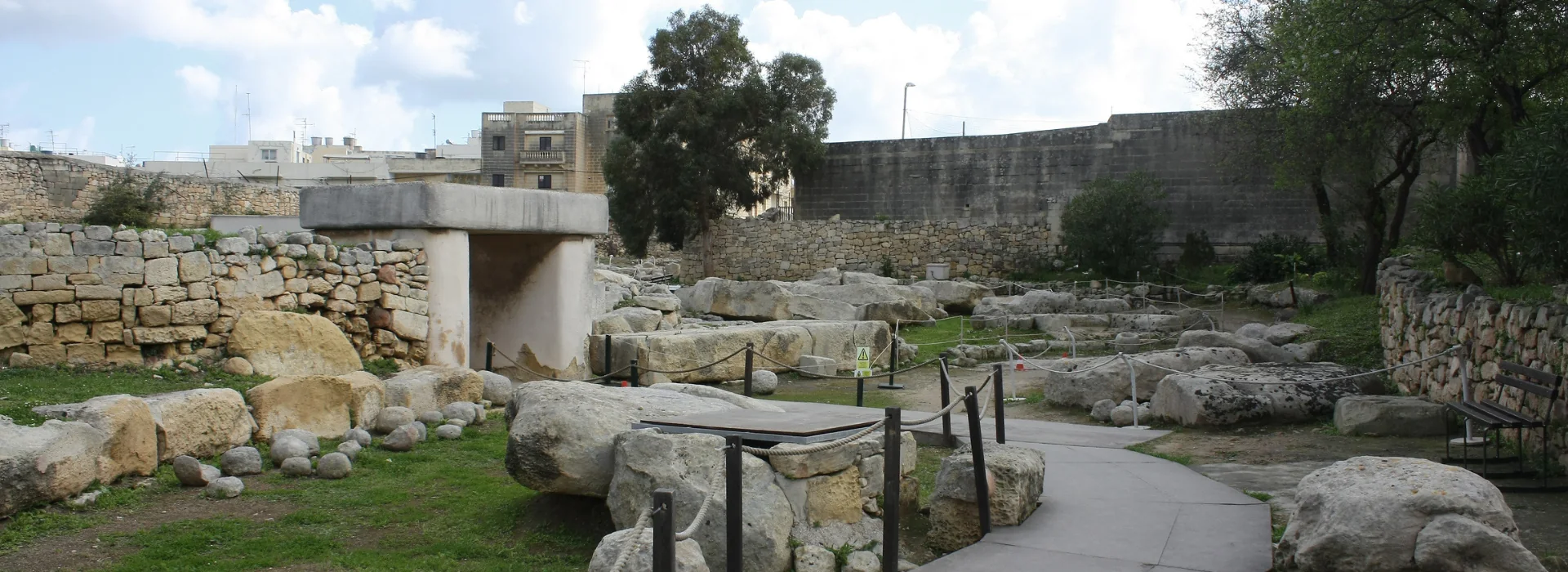 Tarxien Temples in Malta.
2. Accessibility Is Visitor Friendly
The site is fully wheelchair accessible, with dedicated walkways that allow visitors with mobility needs to explore comfortably. There are shaded areas, seating, and accessible toilet facilities on site.
3. Make Use of Audio Guides or Book a Tour
Audio guides are available in multiple languages and are a great way to explore the Tarxien Temples at your own pace. If you prefer deeper insight, you can also request a guided tour through Heritage Malta for a more detailed explanation of the site’s history and symbolism.
4. Plan for Comfort
Most visitors spend between 45 minutes and 90 minutes exploring the Tarxien Temples. So wear comfortable shoes, bring water, and plan to grab a coffee or snack in Tarxien village afterwards, as there are no cafés inside the complex.
5. Pair Your Visit with the Hypogeum
Just a ten-minute walk away is the Ħal Saflieni Hypogeum, one of Malta’s most remarkable prehistoric sites. Because visitor numbers are limited, tickets need to be booked well in advance. Visiting both sites together makes for a rewarding prehistoric day out.
6. Explore a Bit More of Tarxien While You’re There
It’s worth taking a short wander around the locality to get a feel for everyday life in this part of Malta. Just a few minutes away, you’ll find the Parish Church of the Annunciation, a prominent local landmark.
You’ll also come across a handful of local cafés, bakeries, and small shops, mainly serving residents rather than visitors. There are no tourist-focused restaurants or attractions clustered around the site, so it’s a good idea to pack a snack or water beforehand, especially if you’re visiting Tarxien as part of a longer day out. That said, this lack of tourism buzz is part of the charm, giving you a more authentic glimpse of everyday Maltese life.
Enhance your Tarxien Temples experience with AX Hotels
If you’re a guest at one of our award-winning AX Hotels in Sliema, Qawra, Rabat or Valletta, then reach out to our dedicated service team for tailored suggestions for your visit to the Tarxien Temples, ensuring you make the most of your day in the area.
Frequently Asked Questions about Tarxien Temples in Malta.
The Tarxien Temples are a prehistoric temple complex dating back to around 3600–2500 BC. They are among the most important megalithic sites in Malta and form part of the UNESCO-listed Megalithic Temples of Malta, showcasing some of the earliest known free-standing stone architecture in the world.
The Tarxien Temples are significant for their advanced prehistoric construction techniques and detailed stone carvings, including spiral patterns and animal reliefs. They provide valuable insight into Malta’s Neolithic culture, religious practices, and early architectural development.
The Tarxien Temples are located in the town of Tarxien in southern Malta, close to the historic area of Paola and within easy reach of Valletta by car or public transport.
Yes, the Tarxien Temples are open to visitors throughout most of the year and are managed by Heritage Malta. Opening hours typically vary by season, so it is recommended to check updated times before visiting, especially during public holidays or maintenance periods.
Visitors can explore massive limestone structures, decorated altars, carved spiral designs, and reconstructed sections that help illustrate how the temples originally looked. Some of the most delicate original artefacts are preserved in museums for protection.
The site has revealed some of Malta’s most detailed prehistoric carvings, including depictions of animals such as goats and pigs. Archaeologists also discovered evidence suggesting ritual activities, including animal remains and stone altars used for ceremonies.
Yes, guided tours are available through Heritage Malta and private operators, often combined with visits to nearby prehistoric sites such as the Ħal Saflieni Hypogeum. These tours provide deeper historical context and help visitors better understand Malta’s ancient temple culture.
Yes, the Tarxien Temples are well worth visiting for anyone interested in history, archaeology, or UNESCO World Heritage sites. They offer a rare opportunity to see some of the most intricate prehistoric stonework in Malta and gain insight into one of the world’s earliest civilisations.
 Rooftop at 5-star AX The Palace in Sliema.