

Fun Facts, Tips and What to Expect when Visiting Ħaġar Qim and Mnajdra Temples
and dive deeper
There’s a good chance the ancient temples of Ħaġar Qim and Mnajdra are already on your radar if you’re planning a visit to Malta. And rightly so. These two sites are among the oldest free-standing stone structures in the world, predating the Pyramids of Egypt by centuries and remaining one of the main reasons history lovers continue to visit Malta.
Located just a short walk apart, Ħaġar Qim and Mnajdra can both be explored with a single Heritage Malta ticket, making them an easy and rewarding day out. There’s far more to these temples than first meets the eye, though. From solar alignments to hidden architectural details, the Mnajdra complex in particular is full of surprises.
Below, we explore five lesser-known facts to spark your curiosity, followed by practical tips to help you plan your visit and get the most out of your time at these remarkable sites.
5 Lesser-Known Facts About Ħaġar Qim and Mnajdra Temples
1. Mnajdra Was Designed Around the Sun
Mnajdra is one of the clearest examples of prehistoric astronomy in Malta. The South Temple is carefully aligned with the sunrise during the spring and autumn equinoxes. At the summer and winter solstices, sunlight enters at different angles, illuminating specific decorated stone slabs inside the temple. This precision suggests that Mnajdra temples in Malta were closely tied to seasonal cycles, likely linked to farming and ritual life rather than random construction.
2. Ħaġar Qim Uses the Largest Stone Ever Moved in Malta
One of the stones forming the outer façade of Ħaġar Qim weighs an estimated 57 tonnes, making it the heaviest stone used in Maltese prehistory. Built over 5,000 years ago without metal tools or wheels, the achievement is astonishing. Stone balls found nearby are believed to have been used as rollers, offering rare insight into how these massive blocks were transported.
Beyond the central corridors and apses, the Mnajdra complex includes tiny chambers built directly into the thickness of the walls. These discreet spaces are easy to miss but reveal just how sophisticated the design was. Their purpose remains unclear, but they may have been used to store ritual objects or control access, suggesting these were carefully managed ceremonial spaces.
4. Ħaġar Qim Was Once Enclosed
Although the temples appear open today, parts of Ħaġar Qim were originally covered by a corbelled stone roof. This would have created darker, enclosed spaces with strong acoustics. Combined with narrow entrances and screened doorways, the design likely amplified the sense of ritual for those permitted inside.
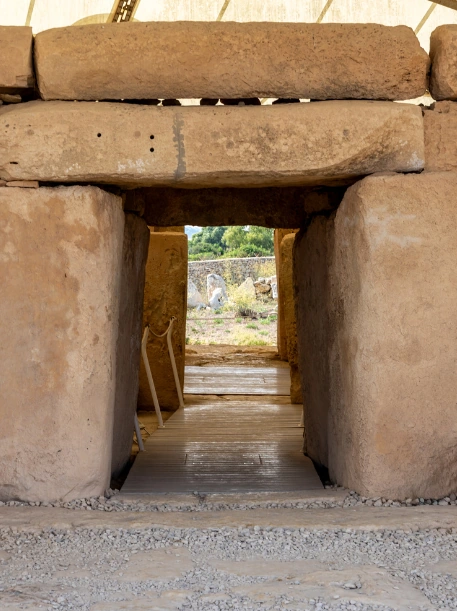

5. The Shelters Protect What Is Still Changing
Both sites are built from soft globigerina limestone, which is vulnerable to wind, rain, and salt air. Because deterioration could be seen happening in real time, protective shelters were installed in 2008. These structures help slow erosion while long-term preservation methods continue to be studied, allowing visitors to experience the temples while safeguarding them for the future.
Top Tips When Visiting Ħaġar Qim and Mnajdra Temples
Visiting Ħaġar Qim and Mnajdra temples is one of the most memorable heritage experiences in Malta. A little planning goes a long way.
1. Tickets and Opening Hours
A single ticket covers both sites, including the Visitor Centre. Adult tickets are around €10, with reduced rates for seniors, students, youths, and children. Entry is free for Heritage Malta members and Passport holders. The temples are generally open daily from around 9.00am to late afternoon, with seasonal variations. Always double-check the temple opening hours before visiting, as times may change.
2. Start at the Visitor Centre
Your visit begins at the Visitor Centre, which provides useful background through interactive displays, models, and audiovisual content. You’ll also find toilets, seating, lockers, and a small cafe with drinks and snacks.
3. Accessibility and Facilities
The Visitor Centre and Ħaġar Qim are wheelchair accessible, with accessible toilets and shaded seating areas available. Mnajdra is more challenging due to uneven terrain and slopes, so visitors with limited mobility may need assistance.
4. Use the Audio Guide or Book a Tour
A free audio guide is available via QR code and works well if you prefer exploring at your own pace. For deeper insight into solar alignments and temple use, you can also book a guided tour through Heritage Malta.
5. Wear Comfortable Shoes and Bring Water
The walk between the temples is about 500 metres along an exposed path. Most visitors spend between 90 minutes and two hours on site, so wear good shoes, bring water, and consider sun protection. There are also lovely walking trails around the area, giving you a closer glimpse into the Maltese countryside spread across these coastal cliffs.
6. Explore the Surrounding Area
Once you’ve explored Ħaġar Qim and Mnajdra, it’s well worth taking some time to discover what’s nearby. Just a short drive away is Wied iż-Żurrieq, a small coastal fishing village best known for its boat trips to the Blue Grotto. These natural sea caves are famous for their crystal-clear waters and the way sunlight reflects off the limestone, creating vivid shades of blue on calm days. Wied iż-Żurrieq is also lined with family-run restaurants serving fresh seafood and traditional Maltese dishes, making it a great lunch stop.
You can also visit Qrendi, a quiet traditional village close to the temples. It’s ideal for a gentle stroll, a coffee in the main square, and a glimpse of everyday Maltese life away from busy tourist centres.
Enhance your Mnajdra Temples experience with AX Hotels
If you’re a guest at one of our award-winning AX Hotels in Sliema, Qawra, Rabat or Valletta, then reach out to our dedicated service team for tailored suggestions for your visit to the Mnajdra Temples, ensuring you make the most of your day in the area.
Frequently Asked Questions about Mnajdra Temples.
The Mnajdra Temples are a prehistoric temple complex dating back to around 3600–2500 BC. They are part of Malta’s Megalithic Temples UNESCO World Heritage Site and are considered among the most sophisticated prehistoric structures in Europe.
The Mnajdra Temples are located on the southern coast of Malta, near the Ħaġar Qim archaeological site. They sit on a coastal plateau overlooking the Mediterranean Sea, offering dramatic natural surroundings.
The Mnajdra Temples are especially known for their astronomical alignment. Certain chambers are oriented so that sunlight illuminates key points during the equinoxes and solstices, showing advanced prehistoric understanding of astronomy and seasonal cycles.
Mnajdra is important because it demonstrates the architectural skill, spiritual practices, and scientific knowledge of Malta’s Neolithic civilisation. The precision of its construction and alignment makes it one of the most remarkable prehistoric sites in the Mediterranean.
Yes, the Mnajdra Temples are part of the UNESCO-listed Megalithic Temples of Malta, recognised for their outstanding universal value as some of the oldest free-standing stone structures in the world.
Visitors can see well-preserved temple structures, massive limestone blocks, carved altars, and reconstructed sections that help illustrate the original layout. The natural coastal setting also adds to the experience.
Mnajdra is often considered one of the most architecturally and astronomically advanced of Malta’s prehistoric temples. While sites like Tarxien focus on intricate carvings, Mnajdra is particularly notable for its precision alignment and coastal setting.
Yes, the Mnajdra Temples are well worth visiting for anyone interested in archaeology, history, or unique cultural landmarks. Their coastal location, UNESCO status, and astronomical significance make them one of Malta’s most impressive prehistoric sites.
5-star Verdala Wellness Hotel - Rabat Malta.