

Masks, music, and mayhem! Your guide to Carnival in Malta
and dive deeper
Carnival in Malta is one of the island’s most colourful and eagerly anticipated cultural celebrations, bringing together vibrant costumes, elaborate floats, music, dancing, and centuries-old traditions.
Taking place during the days leading up to Ash Wednesday, Maltese Carnival transforms towns and villages across Malta and Gozo into lively stages of creativity and celebration. Whether you’re visiting the grand festivities of the Valletta Carnival or the famously eccentric celebrations of Carnival in Gozo, you’re in for a unique experience unlike anything else in the Mediterranean. Here’s your guide to Carnival in Malta and the traditions, events, and experiences that make it such a beloved part of the local calendar.
How was Carnival introduced in Malta by the Knights of St John?
The history of Carnival in Malta is rich and fascinating. The feast was introduced to the island in 1535 by Grand Master Piero de Ponte and has remained an important part of Maltese culture ever since. Carnival takes place during the week leading up to Ash Wednesday and is a time for locals to let their hair down and enjoy themselves before the solemnity of Lent. In fact, the word carnival stems from ‘carnivore’ and therefore the eating of meat. According to local Catholic tradition, following their Carnival indulgence the Maltese abstain from meat for the entire duration of Lent as a way of penitence towards Christ’s suffering leading up to the Easter period.
Following the First World War, a Carnival Committee was set up which paved the way for the Carnival celebrations we celebrate nowadays. The committee came up with various categories and prizes, which naturally brought out the locals’ competitive natures. Dance companies, creative float makers and more would compete every year to be crowned the best in the industry!
Valletta, the capital city of Malta, is the epicentre of Carnival celebrations. The streets are transformed into a crazy City of Fools, with colourful decorations and gigantic, glow-paint floats creating a surreal and magical atmosphere. The famous float parades are a highlight of the festivities, with towering, mechanised, neon-tinged papier-mâché constructions rolling through the streets. These floats are the result of months of painstaking work by collectives of skilled artisans who compete against rival teams to outdo each other year after year.
The carnival festivities are not just about the floats, though. The streets come alive with music and dancing. The costumes worn by the participants in the parade are nothing short of spectacular. Each year, participants compete to see who can come up with the most intricate and imaginative costume. From mythical creatures to political figures, the costumes are a riot of colour and creativity.
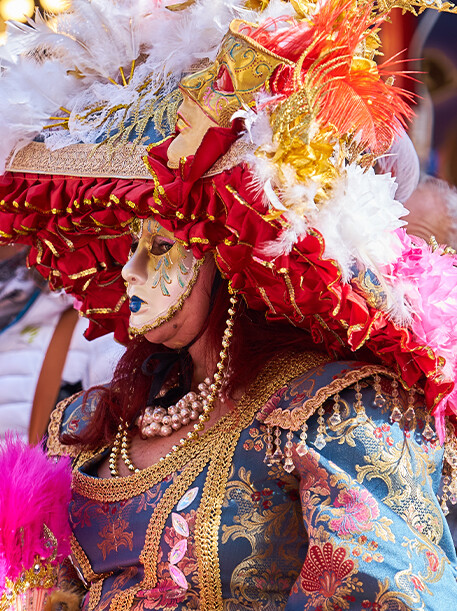 Locals wearing carnival costumes.
 A colourful carnival float going around the streets of Valletta.
What happens during the Valletta Carnival celebrations?
The heart of Carnival in Valletta can be found in the main streets and squares of Valletta and neighbouring Floriana, where thousands gather to celebrate one of Malta’s most vibrant annual traditions.
Visitors can expect spectacular float parades featuring giant papier-mâché creations, many incorporating moving parts, lighting effects, and satirical themes. These impressive floats are often the result of months of work by dedicated Carnival enthusiasts and local organisations competing for recognition and awards.
Dance is another major part of the celebrations. Throughout the festivities, dance companies perform choreographed routines in colourful costumes, while musicians, performers, and entertainers fill the streets with energy and excitement. Families, children, and adults alike often join in by dressing up, adding to the festive atmosphere that makes the Valletta Carnival so memorable.
The celebrations also showcase many of the traditional elements that define Maltese Carnival, including elaborate costumes, grotesque masks, marching bands, artistic installations, and community participation. Above all, Carnival remains a celebration powered by volunteers, artists, and performers who dedicate countless hours each year to keeping this important cultural tradition alive.
More Unique Highlights of the Maltese Carnival
Whether you’re visiting Malta specifically for Carnival or happen to be on the islands during the festivities, there are plenty of unique traditions and experiences worth seeking out beyond the main parades.
Creepy Carnival in Gozo
While Valletta hosts the largest celebrations, Carnival in Gozo has developed a reputation all of its own. The most famous celebrations take place in Nadur, which is known for its spontaneous, alternative, and often surreal atmosphere. Unlike the organised float competitions found in Valletta, Nadur Carnival is characterised by creative costumes, dark humour, masks, and satirical commentary on contemporary events. Many participants create elaborate disguises designed to conceal their identities completely, adding an element of mystery to the festivities.
Il-Qarcilla street theatre
Qarċilla is one of the most distinctive traditions associated with Carnival in Malta, blending comedy, satire, poetry, and street theatre into a uniquely Maltese performance.
Dating back centuries, this humorous mock wedding centres around an absurd marriage contract, with participants reciting rhyming declarations and playful observations about society, politics, and everyday life. The performance remains one of the most charming examples of the creativity and wit that have long been associated with Maltese Carnival.
Carnival floats lighting up Malta’s capital city, Valletta, at night.Carnival Exhibitions
Some cultural organisations and venues, like Spazju Kreattiv in Valletta, often organise exhibitions celebrating the artistry behind Carnival, during the festivities. These displays frequently showcase costumes, masks, float designs, photographs, and historical artefacts that reveal the craftsmanship and dedication involved in bringing Carnival in Valletta and other celebrations to life. If you’re interested in design, theatre, or local traditions, these exhibitions are well worth keeping an eye out for during Carnival season.
Sweets and treats
No celebration of Carnival in Malta would be complete without its traditional seasonal treats. The most famous is Prinjolata, a towering dome-shaped dessert made with sponge cake, cream, nuts, chocolate, cherries, and glacé fruit. Another Carnival favourite is Perlini, colourful sugar-coated almonds that have become closely associated with the festive season. Throughout the celebrations, cafés, bakeries, and street vendors across Malta and Gozo offer these sweet treats, giving visitors another delicious way to experience Maltese Carnival traditions.
Quick tips to help you make the most of your Valletta Carnival visit:
- Do your research: Make sure to plan ahead by checking the official Festivals Malta website for a schedule of events. This will ensure you don’t miss out on any of the exciting performances, parades or fringe events happening throughout the week. On the site, you can also pre-book your tickets to the various dance, costume, and float competitions taking place.
- Dress to impress: Carnival in Valletta is all about dressing up in your most colourful and crazy outfits. Don’t be afraid to go all out and wear a mask to add to the festive spirit.
- Capture the moment: With so many unusual and colourful sites to see, be sure to bring a camera or smartphone to capture the amazing atmosphere and unique spirit of the event. Many official dancers and float operators will be more than happy to pose beside you for a selfie.
- Book ahead: Valletta city becomes positively crowded during Carnival. So if you’re looking to enjoy your day in the capital, it’s a good idea to book your restaurant reservations ahead of time to avoid waiting in long lines for a table.
- Bring ear protectors: Carnival in Valletta can get loud! With music blasting from float speakers and street performances at every turn, consider bringing earplugs, especially if you’re sensitive to noise or young kids are coming along.
- Carry cash: While many vendors and merchants in Valletta accept credit cards, it’s wise to have some cash on hand for smaller purchases from street vendors. Plus, you never know when you might want to try a delicious Maltese treat from one of the many food stands throughout the city.
FAQs about Carnival in Malta
Carnival in Malta takes place during the days leading up to Ash Wednesday and the beginning of Lent. Because Lent changes date each year, the exact timing of the celebrations varies annually.
The main Maltese Carnival festivities typically run for several days, culminating just before Ash Wednesday. During this period, visitors can enjoy parades, performances, costumes, and celebrations across Malta and Gozo.
Absolutely. While children often embrace the fun of dressing up, adults are equally enthusiastic participants in Carnival in Malta, with many creating elaborate costumes, masks, and themed group outfits.
The Valletta Carnival is known for its spectacular float parades, competitive dance performances, artistic costumes, and street entertainment. Throughout the celebrations, the capital comes alive with music, colour, creativity, and community spirit.
Parade schedules can vary from year to year depending on the official programme. Visitors should check information published by Festivals Malta before attending to confirm timings and event locations.
The number of floats participating in the Carnival in Valletta programme varies each year depending on entries and competitions. Visitors can generally expect to see numerous large-scale floats created by skilled artisans, often featuring impressive moving parts and creative designs.
Carnival in Gozo takes place during the same Carnival period celebrated across the Maltese Islands, in the days leading up to Lent. The island hosts both traditional family-friendly festivities and the famous Nadur celebrations.
The Nadur Carnival is known for its spontaneous, alternative atmosphere and often features darker humour, elaborate disguises, and more surreal costume themes than the organised Valletta Carnival celebrations. As the event tends to attract an older crowd and can include scarier costumes and satirical themes, some families with younger children may prefer the more traditional celebrations in Valletta or Victoria.
Yes. The Valletta Carnival is widely regarded as one of the most family-friendly events in Malta, with colourful floats, dance performances, costumes, and entertainment that appeal to all ages.
AX The Saint John Boutique Hotel in Valletta. Photo credits go to viewingmalta.com.