

The Best Hikes in Malta: Five Routes That Show You a Different Side of the Islands
and dive deeper
Best Hikes in Malta: Five Scenic Routes Worth Exploring
Malta feels different when you explore it on foot.
Away from the main roads and busy promenades, the landscape opens up. Limestone paths cut through fields, tiny chapels appear unexpectedly along country lanes and the Mediterranean is often somewhere on the horizon. In winter and spring, after the rains have returned some colour to the countryside, it can be difficult to believe you are on the same island as the busy beaches and resorts of summer.
This is the season when Malta hiking really comes into its own. The air is cooler, walking is more comfortable and there is no need to rush from one patch of shade to another.
The best hikes in Malta are not necessarily about covering the greatest distance either. Part of their appeal lies in what happens along the way: leaving the walls of Mdina behind for open countryside, catching sight of Filfla from the cliffs or arriving in Marsaxlokk ready for a well earned coffee by the harbour.
Here are five walks that reveal a quieter side of Malta.
What are the best hikes in Malta?
From Marsaskala to Marsaxlokk via Tas-Silġ
There is something particularly satisfying about a walk with lunch waiting at the other end.
This route covers around 7 kilometres, starting near Marsaskala before crossing countryside around Tas Silġ and eventually reaching Marsaxlokk.
The change of scenery is what makes it enjoyable. Marsaskala gradually falls behind and the walk takes on a more rural character before the colourful fishing boats of Marsaxlokk begin to signal that you are nearing the end.
For anyone trying walking in Malta for the first time, it is a good place to begin. The distance is manageable and the finish gives you every excuse to slow down.
Find a table along the waterfront, order something to drink and give your legs a rest while the fishing boats move gently in the harbour. After several kilometres on foot, Marsaxlokk feels even more rewarding than when arriving by car.
Dingli Cliffs to Wied iż Żurrieq
The Dingli Cliffs hike has a completely different mood.
Here, the landscape feels bigger. The cliffs fall away towards the Mediterranean and Filfla sits offshore, small and unmistakable against the blue. On clear days, the view seems to stretch considerably further than Malta’s compact size would suggest.
The route runs for approximately 11.2 kilometres from Dingli through Fawwara towards Wied iż Żurrieq.
It is worth taking your time. This is not a walk where the destination should become the only objective. Stop occasionally, look back along the coastline and appreciate how exposed and rugged western Malta can feel.
There is history in the landscape too. Ħaġar Qim and Mnajdra are found in this part of the island, while the walk eventually reaches the area around Wied iż Żurrieq and the Blue Grotto.
For walkers who like a sense of space, this is one of the most memorable hiking trails in Malta.
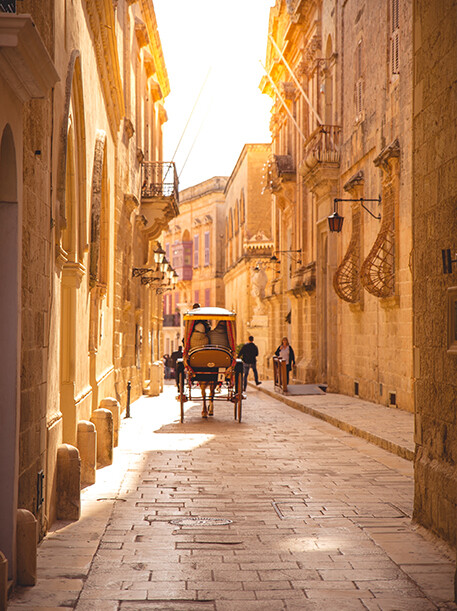 Mdina, Malta.
 Dingli Cliffs.
Start in Mdina and walk into the countryside
Few walks begin as atmospherically as this one.
Before setting off, spend some time inside Mdina. In the quieter streets, footsteps echo against old limestone walls and narrow lanes occasionally open onto views across the island.
Then leave the fortified city behind.
That transition is what makes the route memorable. The medieval streets give way to Rabat and eventually to countryside, with the original walk continuing through areas around Siġġiewi towards Dingli Cliffs.
It is an appealing introduction to Malta trekking because the history never feels separate from the landscape. You begin in one of the country’s most recognisable historic places and gradually walk into a much more rural Malta.
Don’t treat Mdina simply as the starting line. Have a wander first. The walk will still be there when you are ready.
Għadira Bay to the Red Tower
In the north, Malta becomes broader and more open.
This route begins around Għadira Bay and runs for approximately 14.5 kilometres towards the Red Tower, making it one of the longer walks in the original guide.
As the more developed areas recede, the coastline and countryside take over. Eventually the Red Tower comes into view, standing prominently above the surrounding landscape.
There is something satisfying about walking towards a landmark that you can actually see ahead of you. It gives the route a natural sense of destination.
The longer distance means this is not the walk to squeeze between other plans. Give it the time it deserves and make a day of it.
Guests at AX ODYCY in Qawra are particularly well placed for exploring northern Malta, so this is a natural option for anyone staying there who wants to swap the pool or seafront for a day outdoors.
Take the quieter route through Baħrija
Baħrija does not have the immediate name recognition of Mdina or Dingli. That is part of its charm.
The route begins around Tal Fiddien and passes through countryside and cliffs overlooking sections of the Victoria Lines. San Martin Chapel and the Church of the Immaculate Conception appear along the way before the walk continues through Mtaħleb and Kunċizzjoni.
There is less sense here of moving between major attractions. Instead, the pleasure comes from the landscape itself: country roads, open views and small landmarks that would be easy to miss from a car.
Come during the greener months and this part of western Malta can feel surprisingly removed from the island’s resort towns.
For those who prefer quiet landscapes to famous photo stops, Baħrija may well be the walk that stays with you.
Which walk suits you?
Not every good walk needs to be challenging.
If you want something relatively approachable, the Tas-Silġ route has the added pleasure of finishing in Marsaxlokk. Choose Mdina if history is as important to you as the walk itself.
For open sea views, the Dingli Cliffs hike is hard to overlook. Mellieħa suits walkers ready for a longer outing while Baħrija is for days when you simply want to disappear into the countryside for a while.
That variety is one of the pleasures of walking in Malta. The island is small, but its landscapes rarely feel repetitive when explored slowly.
When Malta is best explored on foot
There is a reason these walks feel particularly good outside summer.
During winter and spring, the countryside is greener and the temperatures are much kinder to walkers. A cool breeze along the cliffs can be welcome rather than something you are desperately waiting for.
Summer is another matter. Many routes are exposed and shade can be scarce. If you do plan a Malta coastal walk during the warmer months, avoid the strongest midday heat and carry more water than you think you will need.
Good footwear helps throughout the year. Country paths can be uneven and a route that looks simple on a map can feel very different underfoot.
Check the weather before leaving too, particularly for cliffside walks. Malta may be known for sunshine, but wind can completely change the feel of an exposed coastal route.
And what about Gozo?
Anyone planning walking holidays in Malta should consider leaving room for the sister island.
Gozo has a greener, quieter character and offers a change of pace from the main island. A Gozo hike or Gozo coastal walk can therefore fit naturally into a holiday built around exploring on foot.
What Gozo does offer is contrast. After walking Malta’s cliffs, villages and historic landscapes, crossing to the sister island gives you another side of the archipelago to discover at walking pace.
A final tip before you set off
Don’t plan these walks too tightly.
Bring water, sun protection, supportive shoes and a charged phone, but leave a little room in the day for the unexpected.
You may want to linger over the view at Dingli. Mdina may take longer to leave than planned. That coffee at the end of the Marsaxlokk route might turn into lunch.
Frequently Asked Questions about Best Hikes in Malta
Dingli and Mellieħa are particularly rewarding for coastal views, while Baħrija offers quieter countryside. Mdina is a strong choice if you want to combine a walk with Malta’s history.
The Dingli Cliffs hike route covers around 11.2 kilometres. The exact walking time will depend on your pace and how often you stop to take in the coastal views and surrounding landmarks. For a more enjoyable experience, allow extra time rather than treating it as a route to rush through.
The cooler months are better suited to longer walks than the height of summer. Wear suitable shoes, carry water and sun protection and check both the weather and your intended route before leaving.
Yes, guided Gozo hikes are available for visitors who prefer to explore with a local guide. They can be a good option for discovering quieter countryside and coastal areas while learning more about Gozo’s landscape, history and villages along the way.
Expect open Mediterranean views, limestone cliffs and Filfla offshore. The wider area is also home to Ħaġar Qim and Mnajdra, while the route continues towards Wied iż Żurrieq and the Blue Grotto area.
Gozo is Malta’s greener sister island and has a quieter countryside character. Adding a Gozo coastal walk can therefore bring a welcome change of scenery to a walking focused holiday.
Because they show you what lies between Malta’s headline attractions. On foot, you notice the country chapels, fields, fishing villages, limestone paths and stretches of coastline that are easy to pass without a second glance from the road.
4-star All-Inclusive AX Odycy Resort in Qawra, Malta. Photo Credits go to Viewing Malta.