

Valletta Sightseeing: The Ultimate Guide to Exploring Malta’s Historic Capital
and dive deeper
Few European capitals are as compact, walkable, and packed with history as Valletta. Within just one square kilometre, visitors can discover magnificent churches, grand palaces, museums, theatres, gardens, wartime tunnels, and spectacular harbour views, all within easy walking distance of one another.
Whether you have a single day or a long weekend, Valletta sightseeing offers an incredible opportunity to experience centuries of Maltese history, culture, architecture, and local life without ever needing to venture far from the city centre.
What are the top Valletta sightseeing spots that every visitor should see?
Compared to many European capitals, Valletta is remarkably easy to explore. Most major landmarks are located within a short walk of each other, allowing visitors to experience many of the city’s highlights in a single day.
If you’re wondering which Valletta sights to see should be at the top of your list, start with these iconic attractions:
Grandmaster’s Palace
One of the most important Valletta tourist attractions, the Grandmaster’s Palace served as the seat of power for the Knights of St John. Today, visitors can explore its impressive State Rooms, grand corridors, and armoury collections that offer fascinating insights into Malta’s military and political history.
St John’s Co-Cathedral
Arguably the crown jewel of Valletta’s sightseeingsites, St John’s Co-Cathedral impresses visitors with its richly decorated Baroque interior. Highlights include the marble tombs of the Knights and Caravaggio’s masterpiece, The Beheading of Saint John the Baptist, one of the most celebrated artworks in Europe.
National Museum of Archaeology
Located inside the historic Auberge de Provence, this museum tells the story of Malta’s prehistoric past. Visitors can discover artefacts dating back thousands of years, including treasures from Malta’s ancient temple civilisation, making it one of the most fascinating tourist attractions in Valletta, Malta.
Upper Barrakka Gardens
Among the most popular locations for Valletta sightseeing, the Upper Barrakka Gardens provide panoramic views across the Grand Harbour and the Three Cities. Time your visit to coincide with the famous Saluting Battery ceremony, when the historic cannons are fired beneath the gardens.
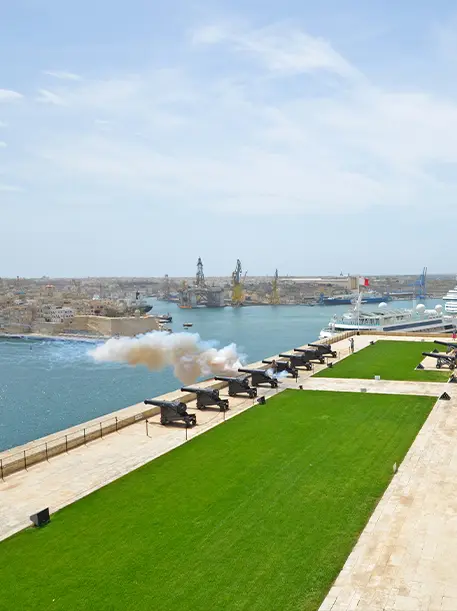 Saluting Battery, Valletta Malta.
 St. John’s Co-Cathedral, Valletta.
Teatru Manoel
Recognised as one of Europe’s oldest working theatres, Teatru Manoel remains a cultural treasure. Guided tours allow visitors to admire its elegant interior and learn about centuries of performances that have entertained audiences since the 18th century.
Valletta Underground
Beneath Valletta’s beautiful streets lies another world waiting to be explored. Valletta Underground tours reveal hidden tunnels, shelters, and passageways that showcase how the city evolved over centuries and adapted during times of conflict.
Lascaris War Rooms
For those interested in World War II history, the Lascaris War Rooms are essential. Hidden deep beneath Valletta’s bastions, these underground command centres played a crucial role during the defence of Malta and the Allied campaign in the Mediterranean.
How can someone plan a full day itinerary for the best Valletta sightseeing experience?
One of the greatest advantages of Valletta sightseeing is how easy it is to experience the city’s highlights on foot. This simple walking route combines history, architecture, culture, art, and stunning views, allowing visitors to discover the very best of Malta’s capital at a relaxed pace.
1. Start at Triton Fountain
Begin your walk at Triton Fountain, one of Malta’s most recognisable landmarks and a fantastic photo opportunity. Standing proudly outside the City Gate, the fountain provides the perfect introduction to Valletta and marks the start of your journey into the city.
As you enter through the City Gate, you’ll immediately notice the contemporary architectural intervention designed by Renzo Piano, which successfully blends modern design with Valletta’s historic fabric.
2. Parliament House and the Open-Air Opera House
Just inside the entrance stands Parliament House, one of Malta’s most distinctive modern buildings. Beside it are the remains of the former Royal Opera House, destroyed during World War II and now transformed into an atmospheric open-air performance venue.
3. Castille Square and St James Cavalier
Turn uphill from the Royal Opera House towards Auberge de Castille, once home to the Knights of St John’s Castilian Langue and today the Office of Malta’s Prime Minister.
Within the same square, you’ll find St James Cavalier, home to Spazju Kreattiv a creative hub that puts on a rich programme of artistic performances. Visitors can often enjoy free exhibitions and artistic installations, while also admiring the beautifully restored historic interiors.
Traditonal Maltese Balconies in Valletta.4. Upper Barrakka Gardens
Cross the road from Castille Square and enter the peaceful Upper Barrakka Gardens. This is one of the most rewarding stops during any Valletta sightseeing tour thanks to its spectacular harbour views.
Overlooking the Grand Harbour and the Three Cities, the gardens offer shaded pathways, beautiful landscaping, resident cats, and the famous Saluting Battery below. If your timing is right, you can witness the ceremonial cannon firing. There’s also a kiosk where visitors can enjoy a coffee or light snack while taking in the scenery.
5. Merchant Street and MUŻA
Leaving the gardens, make your way downhill towards Merchant Street. Along the route you’ll encounter MUŻA, Malta’s national community art museum, which houses an impressive collection of Maltese and European works.
Continue along Merchant Street to experience another side of Valletta, where bustling cafés, restaurants, local shops, and daily life create a vibrant atmosphere distinct from the city’s major monuments.
6. St John’s Co-Cathedral
Around halfway down Merchant Street, turn left and head towards St John’s Co-Cathedral. No Valletta sightseeing itinerary would be complete without visiting this extraordinary landmark.
Inside, visitors can admire elaborate Baroque decoration, richly carved chapels, the tombs of the Knights, and Caravaggio’s iconic masterpiece. Audio guides are highly recommended for gaining a deeper appreciation of the cathedral’s history and artistic significance.
7. St George’s Square and the Grandmaster’s Palace
After visiting the cathedral, head to nearby Republic Street and continue towards St George’s Square. This elegant piazza serves as one of Valletta’s main gathering spaces and is surrounded by historic buildings.
The square is dominated by the Grandmaster’s Palace, where visitors can explore impressive State Rooms and armouries that vividly tell the story of the Knights and Malta’s strategic importance throughout history.
Finish Your Walk
From St George’s Square, continue exploring Valletta’s charming side streets, browse shops along Republic Street, head for a delicious dinner, or simply soak up the atmosphere of Malta’s UNESCO-listed capital. As the evening falls, the city comes alive in an entirely different way with buzzing bars and live music on every corner.
Dining in Valletta
Exploring Valletta inevitably works up an appetite, and fortunately the city offers dining experiences to suit every taste and budget. Whether you’re looking for Michelin-starred cuisine, authentic Maltese specialities, Mediterranean flavours, or a quick snack between attractions, you’ll find plenty of options throughout the capital.
For a truly memorable culinary experience, consider dining at Under Grain, Malta’s Michelin-starred restaurant. Known for its refined tasting menus, impeccable service, and elegant setting, it offers one of the finest dining experiences on the island.
For a more casual experience, wander through Merchant Street and the historic lanes around Strait Street. These areas are home to a diverse mix of restaurants, wine bars, traditional Maltese eateries, Mediterranean kitchens, and lively terraces where visitors can enjoy everything from fresh seafood and local rabbit dishes to international cuisine.
Street food kiosks and cafés can also be found throughout the city, making it easy to grab a coffee, a traditional pastizz, or a quick lunch while continuing your Valletta sightseeing adventure.
Cultural experiences visitors enjoy in Valletta
Beyond its historic landmarks, Valletta is Malta’s cultural capital and hosts a vibrant calendar of events throughout the year.
Visitors exploring Valletta tourist attractions may find themselves encountering traditional religious feasts, complete with decorated streets, marching bands, and spectacular fireworks. These celebrations offer an authentic glimpse into Maltese community life and traditions.
During the festive season, Valletta transforms with Christmas lights, seasonal markets, family attractions, concerts, and entertainment throughout the city. The capital becomes one of Malta’s most enchanting winter destinations.
February brings the colourful Malta Carnival, when Valletta fills with elaborate floats, costumed performers, dancing, and street celebrations. It remains one of the island’s most anticipated annual events and adds a unique dimension to any Valletta sightseeing experience.
Throughout the year, visitors can also enjoy theatre productions, concerts, exhibitions, and festivals at venues such as Teatru Manoel, Spazju Kreattiv, and numerous historic churches and cultural spaces across the city.
Practical information visitors should know before exploring Valletta
A few practical considerations can make your visit to Valletta even more enjoyable:
- Wear comfortable walking shoes, as Valletta’s streets feature hills, steps, and limestone pavements.
- During summer, temperatures can be high, so carry water, sunscreen, and a hat.
- Popular attractions such as St John’s Co-Cathedral and the Lascaris War Rooms can become busy, so booking tickets in advance is recommended.
- Public toilets are available throughout the city, including facilities near major tourist areas.
- Public buses connect Valletta with destinations across Malta, making it an excellent base for wider exploration.
- Early mornings and late afternoons often provide the most pleasant conditions for Valletta sightseeing, particularly during the warmer months.
Frequently Asked Questions about Sightseeing in Valletta
The best sightseeing in Valletta is concentrated around Republic Street, Merchants Street, St George’s Square, and the area surrounding Upper Barrakka Gardens. These walkable districts bring together many of the city’s historic landmarks, viewpoints, museums, restaurants, and cultural attractions within a compact area.
For visitors interested in architecture and history, key Valletta tourist attractions include the Triton Fountain, Parliament Building, the former Royal Opera House, Auberge de Castille, St George’s Square, and the Upper Barrakka Gardens. Many of these landmarks can be explored on foot and offer insight into different periods of Valletta’s development, from the era of the Knights to present-day Malta.
History and culture lovers should prioritise St John’s Co-Cathedral, the National Museum of Archaeology, MUŻA, Fort St Elmo, and the Manoel Theatre. Together, these sites showcase the Knights of St John, Malta’s prehistoric past, artistic heritage, and centuries of Valletta culture.
The National Museum of Archaeology, MUŻA National Community Art Museum, and the National War Museum are among the best museums for Malta Valletta sightseeing. Each offers a different perspective on Malta’s archaeological, artistic, and military history.
One of the best ways to enjoy sightseeing in Valletta is simply by walking through the city’s grid of historic streets and open squares. Republic Street, Merchants Street, Strait Street, St George’s Square, and smaller side alleys reveal architectural details, cafés, churches, and hidden corners often missed on a rushed visit.
The Upper Barrakka Gardens are among the most popular outdoor stops for Valletta sightseeing, offering panoramic views across the Grand Harbour and the Three Cities. Visitors should also explore the Valletta Waterfront and surrounding harbour areas to appreciate Malta’s maritime heritage and stunning coastal scenery.
There are a few guided walking tours that cover the city’s main landmarks, making for an excellent way to experience Valletta tourist attractions while learning about the stories behind them.
Visitors can combine sightseeing in Valletta with local food experiences along Merchants Street, Republic Street, and the city’s many side streets filled with restaurants and cafés. Traditional Maltese dishes, fresh seafood, local wines, and artisan products can all be enjoyed within walking distance of Valletta’s major attractions.
AX The Saint John Boutique Hotel in Valletta Malta; Traditional Maltese Balconies. Photo credits go to Viewing Malta.