

Dive into the Best Beaches in Malta
and dive deeper
A Mediterranean beach haven for all beach lovers
Malta’s beaches enjoy a 98.9% excellent water quality rating, according to the European Environment Agency, making them among Europe’s cleanest. This guide covers the best beaches in Malta, from family-friendly sandy bays like Mellieħa and Golden Bay to secluded rocky coves on Gozo, plus tips on swimming, snorkeling, and beach essentials.
Which part of Malta has the best beaches?
Many of Malta’s best beaches are found on the main island’s northwestern coast and on the neighboring island of Gozo. For example, Mellieħa Bay (Għadira) and nearby Golden Bay and Għajn Tuffieħa on Malta’s northwest are among the most celebrated, and Gozo’s Ramla Bay is also widely regarded as a top beach on the islands.
The north of Malta is famous for its long sandy bays. Mellieħa Bay is often described as the pièce de résistance of Malta’s beaches, with soft golden sand, lifeguards and convenient amenities. Just south of it, Golden Bay and its neighbor Għajn Tuffieħa offer similarly broad sandy shores backed by facilities (restaurants, sunbeds, parking). These spots tend to be the busiest in high summer but also have plentiful services.
In contrast, Gozo’s beaches feel more remote. Ramla Bay on Gozo, with its reddish dunes, is the largest sandy beach in the Maltese Islands. Xlendi and Marsalforn are smaller bays with rocky coasts and beaches, but they add scenic variety. The blend of Malta’s mainland and Gozo ensures a wide choice.
Which are the best sandy beaches in Malta?
Malta’s truly sandy beaches are mostly on the main island’s northwest and on Gozo. Mellieħa Bay, Golden Bay and Għajn Tuffieħa each have broad golden sands. On Gozo, Ramla Bay is noted for its fine reddish sand and dunes, making it one of the best sandy beaches in Malta.
Mellieħa Bay (Għadira) is the longest sandy beach on mainland Malta. Its shallow gentle slope makes it ideal for families. Golden Bay and neighboring Għajn Tuffieħa lie under high clay cliffs. Both have fine sand and strong amenities like beach clubs and restaurants. The main downside is that they fill up in peak season.
Further out, Gozo’s Ramla Bay stands out. Its orange-red sand and warm water are a magnet for swimmers. Smaller sandy spots include Paradise Bay (in the north of Malta) and St. Thomas Bay (Birżebbuġa) on the south coast, though these are less extensive.
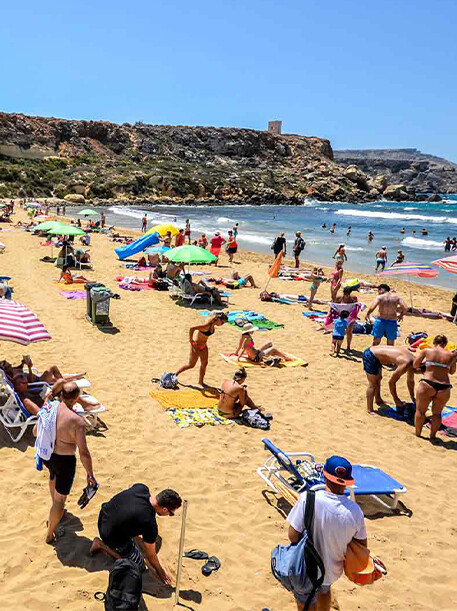 Golden Bay, limits of Mgarr Malta.
 Blue Lagoon, Comino Malta.
Best time to visit the best beaches in Malta
The best time to enjoy the best beaches in Malta is between May and October, when the weather is warm and the sea is ideal for swimming. Each part of the season offers a slightly different experience, from quieter spring days to peak summer energy.
July and August are the hottest and busiest months, with popular spots like Golden Bay and Mellieħa Bay attracting larger crowds. For a more relaxed experience, late spring and early autumn are ideal, offering warm sea temperatures, fewer visitors, and excellent conditions for swimming and snorkelling.
What to bring for a day at Malta beaches
Packing well helps you fully enjoy the best beaches in Malta, especially during the hotter months. Essentials include high-SPF sunscreen, water, a hat, and sunglasses to stay protected under the Mediterranean sun.
If you’re visiting rocky malta beaches, water shoes can make access easier and more comfortable, while snorkelling gear lets you explore the clear waters. A reusable water bottle and a small dry bag for valuables are also practical additions for a smooth and stress-free beach day.
Safety tips for enjoying the best beaches in Malta
The best beaches in Malta are generally safe, but it’s important to stay aware of natural conditions such as jellyfish, currents, and changing weather. Understanding these factors helps ensure a safe and enjoyable experience by the sea.
Jellyfish may occasionally appear, particularly in warmer months, and tend to follow wind direction, so choosing sheltered bays can reduce encounters. Always check beach flag systems before swimming. Red flags indicate unsafe conditions, while lifeguarded beaches provide an added layer of reassurance for visitors.
Swimming in Malta in winter
Malta’s beaches are accessible year-round, and hardier visitors do swim in winter, but caution is essential. Sea temperatures drop to around 15–16°C between December and February, which is manageable for some, but cold enough to cause cold-water shock quickly if you’re unprepared.
The bigger risk is conditions. Winter winds, particularly from the north-east, can turn a calm-looking bay dangerous with little warning. Even if the weather appears fine, swimming conditions can be poor, with rough seas and strong undercurrents. Always check the local weather forecast and any active wind warnings before entering the water.
Crucially, there are no lifeguards on duty outside of summer. Never swim alone in winter, choose sheltered southern bays over exposed northern coastlines. If in doubt, stay out.
Frequently Asked Questions about Best Beaches in Malta
Most of Malta’s top-rated beaches are on the main island’s northwest coast or on Gozo. For example, Mellieħa Bay and Golden Bay on Malta and Ramla Bay on Gozo are frequently listed among the best beaches in Malta due to their sand and water quality.
The largest sandy beaches in Malta are Mellieħa Bay (Għadira), Golden Bay and Għajn Tuffieħa. On Gozo, Ramla Bay is the most notable sandy beach, with its distinctive reddish sand and dunes.
Some of the best quiet beaches in Malta include Fomm ir-Riħ, Slugs Bay, and San Blas Bay in Gozo. These locations are less developed and require a bit more effort to reach, which helps keep them peaceful and uncrowded.
The best beaches in Malta for swimming include Għar Lapsi, Wied iż-Żurrieq, and St Peter’s Pool. These spots are known for their deep, clear waters and open sea access, making them ideal for confident swimmers.
Top snorkeling beaches in Malta include Ċirkewwa, Comino’s Blue Lagoon, and Xwejni Bay in Gozo. These areas offer excellent underwater visibility, rocky formations, and marine life close to shore.
The north of Malta is home to some of the island’s most popular beaches, including Għadira Bay, Golden Bay, and Għajn Tuffieħa. These beaches are known for their sandy shores, facilities, and easy access.
In the south of Malta, beaches like St Peter’s Pool, Pretty Bay, and Wied iż-Żurrieq stand out. These locations offer a mix of unique swimming spots, coastal views, and a more local, less crowded atmosphere.
Family-friendly beaches in Malta include Għadira Bay, Golden Bay, and Ġnejna Bay due to their shallow waters and amenities. These beaches provide a safe and comfortable environment for children, with easy access to food, shade, and facilities.
Sunset over Paradise Bay. Photo Credits go to Viewing Malta.